
The GCC construction sector is set for significant growth, driven by visionary projects and technological advancements, offering opportunities to overcome challenges and shape a sustainable future.
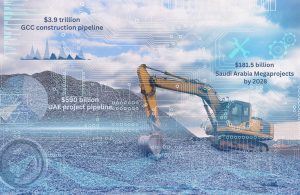
The construction sector is a cornerstone of economic growth and resilience, continually evolving to meet emerging challenges. In the GCC, the industry is poised for a remarkable surge, with an anticipated $3.9 trillion construction pipeline according to Arabian Business[1], driven by ambitious initiatives like Saudi Arabia’s Vision 2030 giga-projects and the UAE’s robust construction pipeline.
However, the path to growth is fraught with challenges. Inflationary pressures, constrained lending markets, and labor shortages present formidable obstacles. Delivering projects on time in this complex environment demands innovation and adaptability.
Herein lies the opportunity: the adoption of Construction Technology (ConTech) – a transformative force reshaping how the industry operates. Traditionally slow to embrace the change, the construction sector now faces a pivotal moment to overhaul outdated processes.
As construction activity accelerates, the integration of advanced technologies and sustainable practices offers a transformative path forward, ensuring the sector’s ability to thrive in a dynamic global landscape.
ConTech: Key Drivers of Growth
Construction technology (ConTech) is driving a new era of efficiency and innovation. Three primary factors underpin its growth:
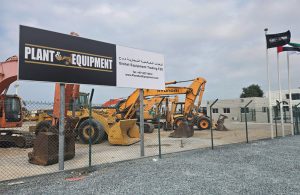
Image Source: Plant & Equipment Website
- Economic Dynamics
Global economic pressures, such as rising material costs and supply chain disruptions, have significantly impacted construction. For instance, steel prices surged by over 200% between 2020 and 2021[i], adding strain to already complex projects. Despite these hurdles, the sector remains resilient, with global construction spending exceeding $2 trillion[ii].
In the GCC, central banks’ reduced interest rates have facilitated access to capital[iii], enabling developers to embark on transformative projects. An influx of $616.7 million in foreign investment has further bolstered the region’s construction pipeline[iv], offering resources for ambitious developments.
- Technological Advancements
Technological integration is revolutionizing how construction projects are executed. Innovations such as AI-driven project planning, 3D printing, and SaaS-based solutions are revolutionizing construction workflows. For example, OpTeam, a portfolio company, leverages AI to optimize project scheduling, enhancing operational precision. In Oman, InnoTech utilizes 3D printing to create advanced concrete structures, showcasing how cutting-edge technology is redefining traditional construction methods.

Image Source: Qiddiya Project – PIF Website
- Mega Projects
The GCC is home to some of the world’s most ambitious developments. Saudi Arabia’s $880 billion Vision 2030 initiatives, including Neom and Qiddiya amongst others, and the UAE’s sustainability-driven Al Maktoum International Airport underscore the region’s commitment to transformative urban planning. As Saudi Arabia prepares for Expo 2030 and the FIFA World Cup in 2034, demand for innovative, sustainable solutions has reached an alltime high. As mega projects scale, implementing new technologies becomes critical, as Shawkat, CEO of Toolmart, emphasizes that “this shift will minimize delays, eliminate manual interventions, and streamline workflows across the supply chain. The result will be a more collaborative, transparent, and efficient process where all stakeholders can make smarter decisions based on up-to-date, data-backed information”. Therefore, these projects serve as testbeds for cuttingedge ConTech, such as Toolmart’s platform, to ensure timely delivery and alignment with sustainability goals.
Challenges in the Industry
While the construction industry is brimming with opportunities, it faces significant challenges, including economic pressures, material shortages, and a critical skills gap. Rising costs of imported materials and supply chain disruptions strain project feasibility. Innovative platforms like BRKZ are transforming traditional supply chains, addressing delays and inefficiencies. “Technology-driven efficiency is no longer a choice but a necessity,” Ibrahim, CEO and Founder of BRKZ states, highlighting their role in bridging gaps with tech-enabled efficiency solutions and contractor-focused credit solutions, ensuring projects progress despite supply chain pressures.
Beyond economic constraints, the sector is also hindered by a significant skills gap, particularly in the region. Despite the growing adoption of advanced technologies, 60% of companies cite a lack of trained professionals as a barrier to effective implementation[6]. Furthermore, Othman from InnoTech highlighted several challenges faced by innovators in the field including issues related to “regulations, cost challenges, and technology challenges”.
Yet, these challenges present opportunities for meaningful transformation. The integration of innovative technologies is not just a response to challenges but a necessary evolution, paving the way for a smarter, more resilient construction sector. The industry’s commitment to sustainability and low-carbon development offers a pathway to innovation. By addressing inefficiencies and upskilling the workforce, the sector can unlock higher levels of efficiency and resilience, meeting the demands of a forward-thinking region.
Regional Trends Driving Transformation: Opportunities in ConTech
The construction sector in the GCC presents immense opportunities for growth and innovation through ConTech, transforming traditional practices with advanced materials, cutting-edge software and AI, hardware advancements, and deep-tech solutions.
- Materials
As material costs are rising and the industry is experiencing shortages, innovations in sustainable and high-performance materials are addressing those critical challenges. At the core of this transformation is digital innovation.

Image Source: Opteam Website
Technologies like 3D printing are enabling the use of advanced concrete composites reducing waste and improving efficiency. Othman Al-Mandhari, Founder and CEO of InnoTech, explains that “new technologies such as 3D printing promise to solve these [labor, environmental, and cost related challenges] problems by automating construction to reduce cost, increase efficiency, and reduce carbon emissions”.
- Software and AI
AI-driven tools and software solutions are revolutionizing construction workflows by enhancing planning, coordination, and decision-making. Companies such as Plant and Equipment are spearheading this evolution by digitizing machinery sales through live online auctions, delivering transparency and flexibility to buyers in a traditionally manual market. Similarly, platforms like Toolmart and BRKZ streamline, optimize product accessibility, and enhance real-time inventory management. Ibrahim of BRKZ, emphasizes how their platform addresses the demands of giga projects across the GCC by digitally streamlining operations. “At BRKZ, we are proactively enabling the sector digitally – reducing RFQ pricing time from hours to minutes, ensuring transparency in deliveries, and streamlining relationships between contractors and suppliers,” he explains.
- Hardware
Technologies such as modular construction and offsite fabrication are reshaping workflows. Modular construction reduces onsite labor and logistical pressures. Moreover, modern hardware solutions, such as robotics and drones, are redefining operational efficiency in construction. Drones have become essential for site surveys, progress monitoring, and safety assessments, while robotics enable precise and automated construction processes. These technologies reduce on-site labor requirements, improve safety, and accelerate project timelines. Additionally, investments in robotics, like those by Neom in GMT Robotics, highlight the growing role of automation in delivering complex giga-projects efficiently[7].

3D Printed Furniture by InnoTech – Image Source: InnoTech Website
- Deep-Tech
Deep-tech innovations, including digital twins, IoT-enabled systems, and advanced robotics, are unlocking new potential for construction projects. Digital twin technology offers real-time insights into asset management and predictive maintenance, while IoT devices ensure seamless connectivity and data integration across project stakeholders.
As the region embraces this transformative era, construction firms that adapt to these trends will be well-positioned to capitalize on the immense opportunities ahead. Addressing the region’s rapid growth requires a skilled workforce, making upskilling initiatives essential. Saudi Arabia, for instance, is projected to require 1. 5 to 2 million additional skilled workers[8]. Tailored training programs aligned with regional standards are being enforced to reduce the skills gap and support sustainable construction practices, fostering innovation and workforce development. The Saudi Contractors Authority (SCA) and Ventures Connect established a strategic partnership at Saudi’s Construction Technology Conference to increase the adoption of digitalization and technology innovation within the sector, encouraging existing projects to make use of such innovations highlighted above[9].

BRKZ team – Image Source: BRKZ Website
The Future of ConTech
The future of ConTech heralds an era of boundless innovation, inviting collaborators, entrepreneurs, and stakeholders to be a part of a transformative movement.
Greentech innovations are addressing waste reduction, sustainable material sourcing, and energy efficiency, enhancing both environmental impact and long-term profitability. Artificial intelligence and datadriven tools are transforming resource allocation, while robotics and IoT are unlocking new frontiers in construction efficiency. As Saudi Arabia’s construction market is projected to reach $181.5 billion by 2028[10] and the UAE’s project pipeline stands at $590 billion[11], the region’s potential is unmatched. The surge in venture capital interest underscores ConTech’s ability to deliver cost savings, improve efficiency, and minimize delays.
Building Tomorrow, Today
The MENA region’s construction sector stands at the cusp of a transformative era fuelled by ConTech and visionary initiatives like Saudi Arabia’s Vision 2030 and the UAE’s Net Zero 2050. Embracing digital tools, sustainable practices, and forward-thinking strategies will empower the industry to navigate challenges and achieve sustainable growth.
Plus VC is committed to this evolution, investing in pioneering companies that are redefining industry standards. As the region’s construction landscape evolves, stakeholders are invited to join this exciting journey, transforming bold ideas into impactful realities and building a sustainable tomorrow, today.
Sources
[1] Middle East has $3.9tn construction pipeline, UAE and Saudi Lead Boom. Arabian Business,
https://www.arabianbusiness.com/industries/construction/middle-east-has-3-9tn-constructionpipeline-uae-and-saudi-lead-boom
[2] S&P Global Platts Steel Price Index.
https://www.spglobal.com/commodityinsights/en/products-services/metals/steel-data-andanalysis
[3] Deloitte. (2024) 13th Edition: Deloitte GCC Powers of Construction 2024.
https://www.deloitte.com/middle-east/en/Industries/energy/perspectives/gcc-powers-ofconstruction-2024.html
[4] Neesha Salian. Most GCC Central banks follow Fed lead, lower key interest rates. Gulf Business:
https://gulfbusiness.com/gulf-central-banks-cut-key-interest-rates-dec/
[5] Rai, B. Foreign Capital Inflows in GCC equity markets surge to $616.7 mln. Zawya.
https://www.zawya.com/en/markets/equities/foreign-capital-inflows-in-gcc-equity-marketssurge-to-6167mln-d12veqcc
[6] ICC expands training to meet industry standards amidst GCC construction boom. Construction Week Online
https://www.constructionweekonline.com/business/icc-expands-training-to-meetindustry-standards-as-gcc-construction-boom-drives-demand-for-skilled-workers
[7] NEOM invests in construction robotics to accelerate development – Construction Week Online. (2024, December 13). Construction Week Online.
https://www.constructionweekonline.com/gigaprojects/neom-invests-in-construction-roboticsto-accelerate-development
[8] ICC expands training to meet industry standards amidst GCC construction boom. Construction Week Online
https://www.constructionweekonline.com/business/icc-expands-training-to-meetindustry-standards-as-gcc-construction-boom-drives-demand-for-skilled-workers